
In short
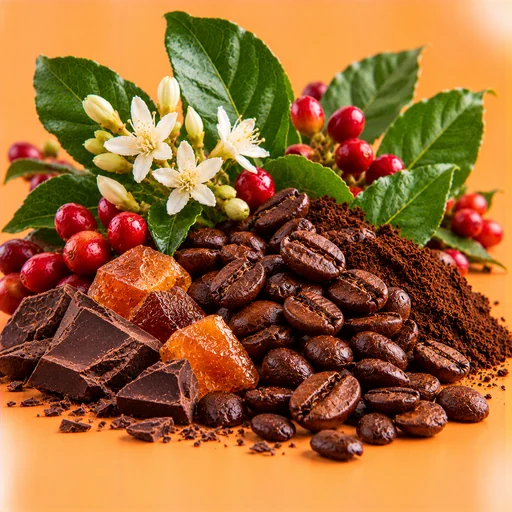
Coffee absolute is extracted from roasted coffee beans, the seeds of Coffea species. It has a dark, roasted and slightly smoky coffee odour.
What Coffee Absolute smells like
Coffee absolute is dark and bittersweet: roasted and slightly smoky, with chocolate and caramel notes and a woody-earthy depth, in glossary descriptions. It is dark brown to nearly black and tenacious. A CO2 extract of coffee is described as denser and closer to fresh espresso, keeping roasty-nutty pyrazines and caramel-sweet furanones; a decolourised absolute is sweeter, with chocolate and tobacco notes, and does not darken a formula.
- Leading note
- Roasted coffee
- Clear facets
- Bittersweet
- Supporting facets
- Smoky, chocolate, caramel
- Faint facets
- Woody-earthy
- Character
- Dark, rich, roasted, tenacious
What makes Coffee Absolute distinctive
Roasted coffee with its smoke and caramel: darker and more bittersweet than cocoa.
How Coffee Absolute is used
Used in gourmand, oriental and woody compositions, and in coffee flavours. The standard absolute colours formulas dark.
Typical role: modifier (used in small amounts to change the character of a blend).
How Coffee Absolute differs from similar materials
- Cacao Absolute
- Cacao is drier and more powdery, with a milky, liqueur-like side; coffee is roasted, smoky and caramel-bittersweet.
- Coffee CO2 Extract
- Coffee CO2 extract is described as darker and more complete, with roasty-nutty and caramel notes.
Each difference compares the published descriptions of the two materials. Smell varies with grade, supplier and dilution; compare them side by side on blotters before substituting one for another.
Identity and classification
- Type
- Absolute
- Origin
- Natural
- Odour family
- Gourmand
- Note position
- Heart to base note
- Physical form at room temperature
- Viscous liquid
- Botanical source
- Coffea arabica
- CAS number
- 84650-00-0
The CAS number was checked on 19 October 2026 against a PubChem substance record that gives it for this material. A natural material is a mixture, so it has no single formula; its composition varies with origin and processing.
Safety and compliance
No safety data sheet or hazard classification for coffee absolute was found published: PubChem holds no EU GHS notification for it, and The Good Scents Company lists none. That is an absence of published data, not evidence that it is safe; ask the maker for the safety data sheet of the lot you hold.
This page is general information, not a safety assessment or a specification. Confirm identity, composition, IFRA status and allergen content from your supplier's documents for the lot you hold.
Materials it works with
-

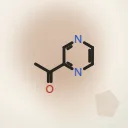 2-Acetylpyrazine
Aroma chemical · Gourmand — popcorn, roasted, nutty, bready
-

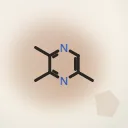 2,3,5-Trimethylpyrazine
Aroma chemical · Gourmand — roasted, nutty, cocoa, earthy
-

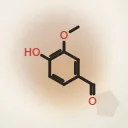 Vanillin
Aroma chemical · Gourmand / Amber — vanilla, sweet, creamy
-
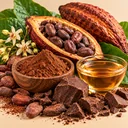
 Cacao Absolute
Absolute · Gourmand — chocolate, cocoa, roasted, bitter
Coffee Absolute is also suggested as a partner on the pages for 2-Methylbutanal, 2-Methyltetrahydrofuran-3-one, Coffee CO2 Extract, Difurfuryl Disulfide and Tetramethylpyrazine.
Used in formulas and accords
Used in 1 published formula
Coffee Absolute is an ingredient in 1 perfume formula in the Formula & Accord Library.
RUŌOD House Originals
Original compositions by RUŌOD House.
Further reading
Questions about Coffee Absolute
Is Coffee Absolute natural or synthetic?
Coffee Absolute is natural. It is a concentrated extract obtained from plant material with a solvent, then washed with ethanol to remove the waxes.
What is the CAS number of Coffee Absolute?
84650-00-0, the registry number for the absolute as a substance rather than a single molecule. It was checked against PubChem on 19 October 2026.
Which published formulas use Coffee Absolute?
Coffee Absolute is used in 1 published formula in the RUŌOD Lab Formula & Accord Library: Patchouli Cold Brew. Each is listed with a link under "Used in formulas and accords" on this page.
Sources
- PubChem — substance 439541599, checked 19 October 2026.
- Premiere Peau — Coffee absolute — published perfumery reference.
- Premiere Peau — Coffee CO2 — published perfumery reference.
- Cosmeticobs — Perfumes: the coffee note — published perfumery reference.
- Olfactory profile: the RUŌOD Lab team's synthesis of the published descriptions above, reviewed 24 October 2026. Evidence: more than one published description. Classification and the short description: revision 1. Descriptions of odour are judgement, not measurement.